Dental Bridge Treatment in Rawalpindi
Missing one or more teeth can affect chewing, appearance, speech and the way neighbouring teeth function. Dental bridge treatment in Rawalpindi provides a fixed tooth-replacement option for suitable patients by filling t...
- Missing tooth assessment
- Fixed bridge option review
- Bite and gum health planning
- Cleaning and aftercare advice
About Dental Bridges in Rawalpindi
Missing one or more teeth can affect chewing, appearance, speech and the way neighbouring teeth function. Dental bridge treatment in Rawalpindi provides a fixed tooth-replacement option for suitable patients by filling the missing-tooth space with an artificial tooth supported by neighbouring teeth or, in selected cases, dental implants. At Brush & Floss Dental Clinic, patients looking for a fixed dental bridge in Rawalpindi can visit our clinic at Shop G-14, Bhatti Arcade Plaza, Tulsa Road, Rawalpindi for assessment, treatment planning and restorative dental care. Whether you are missing a front tooth, molar or more than one tooth, the condition of the supporting teeth, gums, bite and available space should be assessed before selecting a dental bridge. Visit American Dental Association – MouthHealthy: Bridges
Fixed Dental Bridge in Rawalpindi
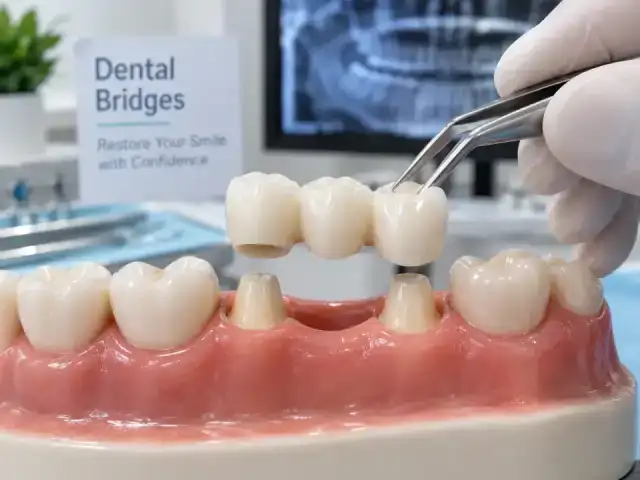
A fixed dental bridge replaces a missing tooth or teeth with a restoration that remains attached inside the mouth. A conventional bridge generally includes:
- One or more artificial replacement teeth
- Supporting crowns on neighbouring teeth
- Connectors joining the bridge units together
The artificial replacement tooth is commonly called a pontic. Unlike a removable partial denture, a fixed bridge is not normally taken out by the patient for daily cleaning.
Who May Need Dental Bridge Treatment?
Dental bridge treatment may be considered if you have:
- One missing tooth
- Multiple missing teeth in the same area
- A missing front tooth
- A missing premolar or molar
- A visible gap affecting your smile
- Difficulty chewing because of tooth loss
- Suitable teeth available to support a conventional bridge
- A previous bridge that needs replacement
Not every missing-tooth case is suitable for the same bridge design. The condition of the supporting teeth and gums is particularly important.
Dental Bridge for One Missing Tooth
A common fixed bridge can replace a single missing tooth. In a typical 3-unit bridge, the restoration consists of:
- A crown on one supporting tooth
- One artificial replacement tooth
- A crown on the supporting tooth on the opposite side
The three components are connected together. The supporting teeth need to be healthy enough to carry the bridge.
Dental Bridge for Multiple Missing Teeth
Dental bridges can sometimes replace more than one missing tooth. However, longer bridge spans place greater demands on the supporting teeth. Treatment planning should consider:
- Number of missing teeth
- Number and condition of supporting teeth
- Gum and bone health
- Bite forces
- Tooth grinding
- Location of the missing teeth
For larger gaps, other options such as an implant-supported bridge or removable partial denture may also need to be considered.
Dental Bridge for Front Teeth
A front dental bridge can replace a missing front tooth when a fixed bridge is suitable. Aesthetic planning is particularly important because the restoration is visible when smiling. The dentist considers:
- Tooth shade
- Tooth shape
- Size
- Gum line
- Smile line
- Position of the supporting teeth
- Bite
The aim is to restore the missing tooth while achieving an appearance that blends appropriately with the surrounding smile.
Dental Bridge for Molars and Back Teeth
Dental bridges may also replace missing back teeth. Because molars experience strong chewing forces, treatment planning should consider:
- Strength of supporting teeth
- Bridge span
- Number of missing teeth
- Bite
- Existing fillings or crowns
- Gum condition
- Teeth grinding or clenching
Not every missing molar can be predictably replaced with a conventional bridge.
Types of Dental Bridges
Traditional Dental Bridge
A traditional bridge commonly uses crowns on teeth on both sides of the missing-tooth space. The artificial tooth is connected between the supporting crowns.
Cantilever Bridge
A cantilever bridge is supported from one side. Because the supporting tooth receives additional force, this design is only suitable in selected situations.
Maryland or Adhesive Bridge
An adhesive bridge uses one or more wings bonded to neighbouring teeth. This may require less preparation of the supporting teeth in suitable cases.
Implant-Supported Bridge
An implant-supported bridge uses dental implants rather than natural teeth to support the replacement teeth. This may be considered when several teeth are missing and implant treatment is suitable.
Zirconia Dental Bridge
Zirconia dental bridges are tooth-coloured ceramic restorations that may be used in selected cases. Potential characteristics include:
- High strength
- Tooth-coloured appearance
- No traditional visible metal framework
- Suitability for selected front or back tooth restorations
The appropriate material depends on the length of the bridge, tooth position and bite forces.
Porcelain and Ceramic Dental Bridges
Ceramic and porcelain-based restorations may provide a natural tooth-coloured appearance. They may be particularly relevant where aesthetics are important. The suitability of a particular ceramic material depends on the bridge design and the amount of force the restoration will receive.
Porcelain-Fused-to-Metal Bridge
A PFM bridge combines a metal framework with tooth-coloured porcelain. This type of restoration has traditionally been used for both front and back tooth replacement. Material selection depends on strength requirements, appearance, bridge position and treatment plan.
Dental Bridge Procedure
1. Dental Examination
The dentist evaluates:
- Missing-tooth space
- Supporting teeth
- Gums
- Bite
- Existing fillings or crowns
- Overall oral condition
Dental X-rays may be required to assess the roots and supporting bone.
2. Treatment Planning
The appropriate bridge design is selected according to:
- Number of missing teeth
- Condition of neighbouring teeth
- Location of the gap
- Bite forces
- Material requirements
- Appearance
Alternative treatment options may also be discussed.
3. Tooth Preparation
For a conventional bridge, the supporting teeth may be prepared for crowns. Local anaesthetic may be used where appropriate.
4. Impression or Digital Scan
An impression or digital scan records the prepared teeth, gap and surrounding bite. This information is used to make the bridge.
5. Temporary Bridge
A temporary restoration may be placed while the final bridge is being prepared.
6. Final Bridge Placement
The completed bridge is checked for:
- Fit
- Bite
- Shape
- Contacts with nearby teeth
- Appearance
- Relationship with the gums
It is then secured to the supporting teeth.
How Is a Dental Bridge Fixed?
A conventional fixed bridge is usually cemented to the prepared supporting teeth. The crowns and artificial replacement tooth are joined together as one restoration. Once fitted, the patient does not normally remove the bridge. Special cleaning methods are needed beneath the artificial tooth.
How Long Does Dental Bridge Treatment Take?
Treatment time varies according to:
- Bridge type
- Number of missing teeth
- Condition of supporting teeth
- Need for other dental treatment
- Material selected
- Laboratory workflow
- Need for temporary restoration
Many conventional bridges require more than one appointment.
Does Dental Bridge Treatment Hurt?
Local anaesthetic may be used while supporting teeth are prepared. Some temporary sensitivity or tenderness can occur after treatment. Patients may initially notice:
- Tooth sensitivity
- Gum tenderness
- Pressure
- Bite awareness
Persistent or worsening pain should be reviewed.
Dental Bridge Recovery and Healing
Most patients can return to routine activities relatively quickly after bridge treatment, although the teeth and gums may need some time to adapt. Temporary symptoms may include:
- Mild gum tenderness
- Sensitivity
- Awareness of the new restoration
- Slight changes in how the bite feels
If symptoms become severe or continue unexpectedly, arrange a dental assessment.
Eating After a Dental Bridge
After bridge placement:
- Avoid chewing until numbness has resolved
- Follow instructions for any temporary bridge
- Avoid very hard or sticky foods if advised
- Begin chewing carefully while adapting to the restoration
Patients with a temporary bridge may receive additional dietary instructions.
How to Clean a Dental Bridge
A bridge requires cleaning both around and underneath the restoration. Plaque and food can collect around:
- Supporting crowns
- Gum margins
- Under the artificial tooth
- Bridge connectors
Daily cleaning may involve:
- Toothbrushing
- Floss threaders
- Super floss
- Interdental brushes
- Other bridge-cleaning aids recommended by the dentist
How to Floss Under a Dental Bridge
Because the bridge units are connected, ordinary floss cannot simply pass vertically between them. A floss threader or bridge floss can be passed underneath the artificial tooth. Cleaning underneath the bridge is important for protecting the gums and supporting teeth.
How Long Does a Dental Bridge Last?
The lifespan of a bridge varies between patients. Factors affecting longevity include:
- Health of supporting teeth
- Bridge material
- Number of bridge units
- Oral hygiene
- Gum health
- Bite forces
- Teeth grinding
- Diet
- Regular dental care
A bridge should not be considered guaranteed to last permanently.
Can a Dental Bridge Last 20 Years?
Some well-maintained bridges can remain functional for many years, but there is no guaranteed lifespan. A bridge lasting 20 years depends on several factors, particularly the condition of its supporting teeth and gums. Regular reviews help identify problems before they become more extensive.
Can a Dental Bridge Fall Out?
Yes. A bridge may become loose or come off because of:
- Breakdown of dental cement
- Decay underneath supporting crowns
- Fracture of a supporting tooth
- Heavy bite forces
- Tooth grinding
- Damage to the bridge
If the bridge comes out, keep it safe and arrange a dental appointment.
What Should I Do If My Dental Bridge Falls Out?
If a bridge becomes loose or detaches:
- Avoid chewing on the affected area
- Keep the bridge if it has come out completely
- Keep the area clean
- Do not permanently attach it with household glue
- Arrange a dental examination
The dentist needs to assess the bridge and supporting teeth before deciding whether it can be re-cemented, repaired or replaced.
Dental Bridge Repair
Minor problems with some bridges may be repairable. Treatment depends on:
- Type of damage
- Bridge material
- Fit
- Condition of the supporting teeth
- Presence of decay
A significantly damaged or poorly fitting bridge may need replacement.
Dental Bridge Replacement
Replacement may be needed if a bridge:
- Repeatedly comes loose
- Breaks
- Develops significant wear
- Has decay underneath it
- No longer fits properly
- Causes persistent bite problems
- Has failing supporting teeth
The underlying teeth must first be examined.
Why Does My Dental Bridge Hurt When Chewing?
Pain while chewing may occur because of:
- Bite pressure
- Supporting tooth sensitivity
- Gum inflammation
- Loose bridge
- Tooth decay
- Damaged supporting tooth
- Another underlying dental condition
Persistent pain should be professionally assessed.
Dental Bridge Sensitivity
Temporary sensitivity may occur after treatment, particularly in supporting teeth. Sensitivity that becomes severe or does not improve may require further evaluation.
Dental Bridge and Gum Recession
Gum recession may expose portions of the supporting teeth or bridge margins. This can affect:
- Appearance
- Cleaning
- Food collection
- Sensitivity
Changes in the gum around an existing bridge should be evaluated.
Can Gum Disease Affect a Bridge?
Yes. A conventional bridge relies on healthy supporting teeth and surrounding tissues. Advanced gum disease can weaken tooth support and negatively affect the long-term stability of the bridge.
Dental Bridge vs Dental Implant
Both bridges and implants can replace missing teeth, but the treatments are different.
Dental Bridge
A conventional bridge uses neighbouring teeth for support.
Dental Implant
A dental implant replaces a missing tooth root and can support a separate crown.
Considerations include:
- Condition of neighbouring teeth
- Bone availability
- Number of missing teeth
- Treatment time
- Medical condition
- Cost
- Patient preference
An examination is needed to determine which options are suitable.
Dental Bridge vs Partial Denture
A fixed bridge stays attached inside the mouth.mA removable partial denture can be removed for cleaning. A partial denture may be considered when multiple teeth are missing or when a fixed bridge is not suitable.
Dental Bridge vs Dental Crown
A crown restores an existing tooth. A bridge replaces a missing tooth and may use crowns on neighbouring teeth for support.
Dental Bridge vs Root Canal
A dental bridge replaces missing teeth. Root canal treatment treats the internal pulp and root canal system of an existing tooth. They address different dental conditions.
Dental Bridge vs Veneers
A bridge replaces a missing tooth. Veneers cover the visible surfaces of existing teeth and are mainly used for selected cosmetic concerns.
Alternatives to a Dental Bridge
Depending on the patient's condition, alternatives may include:
- Dental implant
- Implant-supported bridge
- Removable partial denture
- No replacement in selected situations
The most appropriate treatment depends on the missing-tooth area and overall dental condition.
Dental Bridge Advantages
Potential advantages include:
- Fixed replacement of missing teeth
- Improved chewing
- Closing a visible tooth gap
- Improved smile appearance
- No daily removal
- Can use existing teeth for support in suitable cases
Dental Bridge Disadvantages
Considerations include:
- Supporting teeth may require preparation
- Cleaning underneath requires extra effort
- Supporting teeth can still develop decay
- Gum health is important
- The bridge can loosen or fracture
- Future replacement may be required
- Longer bridge spans may not be suitable
Dental Bridges and MRI
Dental bridges do not automatically prevent MRI imaging. Patients should tell the imaging provider about any dental restorations before the scan. Metal-containing dental restorations may sometimes affect imaging close to the mouth and face.
Dental Bridge Cost in Rawalpindi
The dental bridge cost in Rawalpindi varies according to the number of missing teeth and type of restoration required. Cost can depend on:
- Number of bridge units
- Number of missing teeth
- Zirconia, ceramic, PFM or other material
- Front or back tooth location
- Condition of supporting teeth
- Root canal treatment if required
- Core buildup if required
- Temporary restoration
- Laboratory requirements
- Additional dental treatment
A 3-unit dental bridge and a larger multi-unit bridge will not necessarily have the same cost. A dental examination and treatment plan are required before an accurate price can be provided.
Dental Bridge Treatment in Tulsa Road, Rawalpindi
Patients looking for dental bridge treatment in Rawalpindi can visit Brush & Floss Dental Clinic at: Shop G-14, Bhatti Arcade Plaza, Tulsa Road, Rawalpindi
Our clinic is conveniently accessible for patients coming from Lalazar, Lalazar Colony, New Lalazar, Dheri Hassanabad, Tahli Mohri, Tahli Mohri Chowk, Sher Zaman Colony, Dhok Huma, Khatana, Ashraf Colony, Kamalabad, Kamalabad Chowk, Harley Street, Dhok Saiydan, Quaid-e-Azam Colony, Khayaban Villas, Ahmedabad, Kotha Khurd, Dhok Jumma, Adiala Road, Rawalpindi Cantt, Baqir Colony, Raja Akram Colony, Gulshan-e-Zaheer and Gulshan-e-Iqbal/Lalazar side. Patients searching for dental bridge near Lalazar, fixed dental bridge near New Lalazar, tooth bridge near Adiala Road, dental bridge treatment near Dheri Hassanabad, dental bridge near Tahli Mohri, zirconia bridge near Kamalabad, dental bridge near Harley Street Rawalpindi or fixed tooth bridge near Rawalpindi Cantt can conveniently reach our Tulsa Road clinic.
Frequently Asked Questions
What is dental bridge treatment?
Dental bridge treatment replaces one or more missing teeth using an artificial tooth supported by neighbouring teeth or implants.
Is a dental bridge permanent?
A fixed bridge is intended to remain attached in the mouth, but it may eventually need repair or replacement.
How is a dental bridge fixed?
A conventional bridge is usually secured to prepared supporting teeth using connected crowns and dental cement.
Can a bridge replace one missing tooth?
Yes. A 3-unit bridge is commonly used to replace a single missing tooth when appropriate supporting teeth are available.
Can a dental bridge replace multiple teeth?
Yes, selected bridge designs can replace multiple missing teeth, although longer spans require careful assessment.
Does a dental bridge hurt?
Temporary tenderness or sensitivity can occur after treatment. Severe or persistent pain should be assessed.
How long does a dental bridge last?
Lifespan varies according to supporting teeth, bridge design, hygiene, bite forces and maintenance.
How do I clean under my dental bridge?
Floss threaders, bridge floss and interdental cleaning aids can help clean underneath the artificial tooth.
Can a dental bridge fall out?
Yes. A loose or detached bridge should be professionally assessed.
Can a bridge be repaired?
Some bridge problems may be repairable, while other cases require replacement.
Which is better: dental bridge or implant?
The appropriate choice depends on the supporting teeth, bone, number of missing teeth, health, cost and treatment goals.
Is a dental bridge better than a partial denture?
They are different options. A bridge is fixed, while a partial denture is removable. Suitability depends on the individual case.
Can I get a bridge for a missing front tooth?
Yes, provided the supporting teeth and other clinical factors make a bridge appropriate.
What is the dental bridge price in Pakistan?
The price varies according to the number of units, bridge material, supporting teeth and additional treatment.
How much does a dental bridge cost in Rawalpindi?
The exact cost depends on bridge design, number of units, material and supporting teeth. An examination is required for an individual quotation.
Book a Dental Bridge Assessment in Rawalpindi
For assessment of one or more missing teeth and to discuss fixed dental bridge treatment, contact:
Brush & Floss Dental Clinic
Phone / Appointment: 0316-8539478
Address: Shop G-14, Bhatti Arcade Plaza, Tulsa Road, Rawalpindi
Why Choose Dental Bridges in Rawalpindi
Dental Bridges in Rawalpindi at Brush & Floss Dental Clinic starts with a clear talk about your goal and current condition. We explain the plan, price, time, and care before you book.
Personalised Planning
Every treatment starts with a short check of what you want to change. The team then picks the right steps, product, and home care for you.
Appointment Experience
During the visit, your specialist explains each main step before starting. We keep you comfortable and check the result before you leave.
Careful Finish
Brush & Floss Dental Clinic uses clean tools and clean clinic care. Book for upkeep, an event, or a first visit. You still get careful care from start to finish.
Dental Bridges Appointment Steps
- Talk and prep: We review your goal, past work, and any limits. Then we set up the right tools for Dental Bridges.
- Care steps: The Dental Bridges process is done with steady care. We adjust the pace, product, and finish as needed.
- Finish and aftercare: We review the result with you. You leave with clear care tips and follow-up advice.
Dental Bridges in Tulsa Road, Rawalpindi & Nearby Areas
A dental bridge may help replace a missing tooth or small gap when nearby teeth can support a fixed restoration. Brush & Floss Dental Clinic discusses dental bridges in Tulsa Road Rawalpindi at Shop G-14, Bhatti Arcade Plaza, Tulsa Road, Rawalpindi, including fit, bite, cleaning access and long-term maintenance. Patients visit from Lalazar Colony, New Lalazar, Dheri Hassanabad, Tahli Mohri Chowk, Dhok Saiydan and Rawalpindi Cantt. If you are looking for a tooth bridge near Lalazar, dental bridge near Adiala Road or a dentist in Lalazar Rawalpindi for missing tooth options, the Tulsa Road clinic is a convenient consultation point. Brush & Floss Dental Clinic is also reachable for patients from Kamalabad, Harley Street, Kotha Khurd and nearby areas.
Dental Bridges FAQs
Who is Dental Bridges suitable for?
Dental Bridges suitability depends on a dental examination, symptoms, oral health history and the treatment goal discussed with the clinic team.
How do I book Dental Bridges at Brush & Floss?
Call +92 316 8539478 or use the website booking option to ask about availability, timing and any preparation needed before your visit.
Will the price for Dental Bridges be confirmed online?
The final price is confirmed after the clinic understands the case, materials, session timing and treatment needs.