Dentures in Rawalpindi
At Brush & Floss Dental Clinic, patients looking for dentures in Rawalpindi can visit our clinic at Shop G-14, Bhatti Arcade Plaza, Tulsa Road, Rawalpindi for assessment and denture treatment planning.
Available Denture Services
About Denture in Rawalpindi
What Are Dentures?
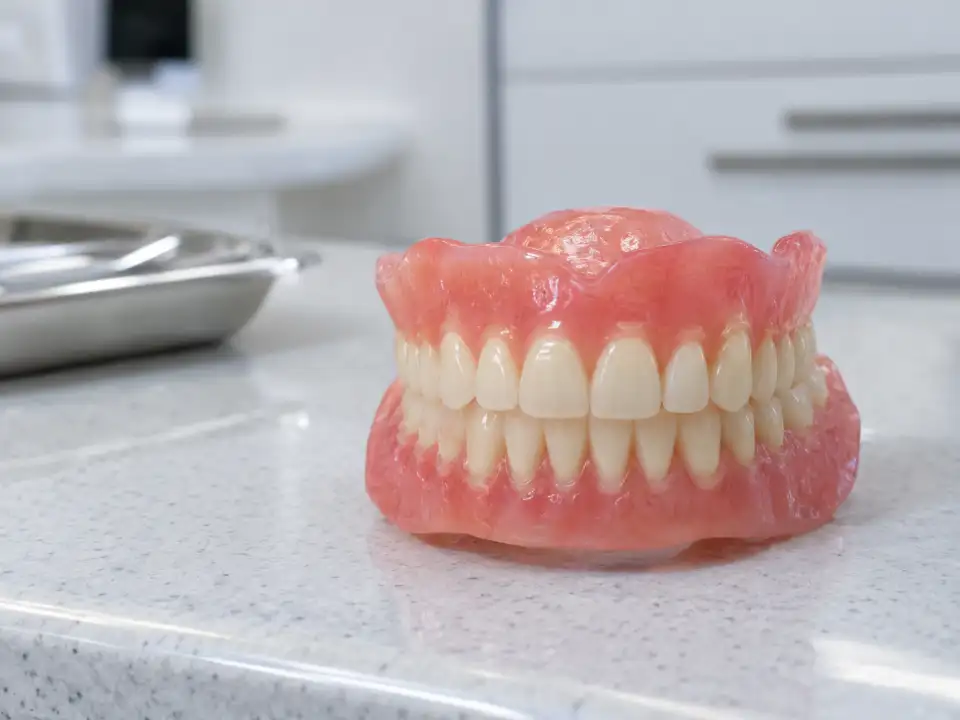
Dentures are artificial teeth and supporting bases designed to replace missing natural teeth. Depending on the patient's condition, dentures may replace:
- One missing tooth
- Several missing teeth
- Teeth in one area of the mouth
- Most teeth in an arch
- All teeth in the upper jaw
- All teeth in the lower jaw
- All teeth in both jaws
Unlike a conventional fixed bridge, many dentures can be removed by the patient for cleaning. Visit ADA MouthHealthy – Dentures
Types of Dentures
The appropriate denture depends on how many teeth remain, where the missing teeth are located, the condition of the gums and supporting bone, and the patient's treatment goals. The main types include:
- Removable Partial Denture
- Cast Partial Denture
- Complete Denture
- Acrylic Partial Denture
- Flexible Partial Denture
- Immediate Denture
- Implant-Supported Denture in selected cases
Removable Partial Denture
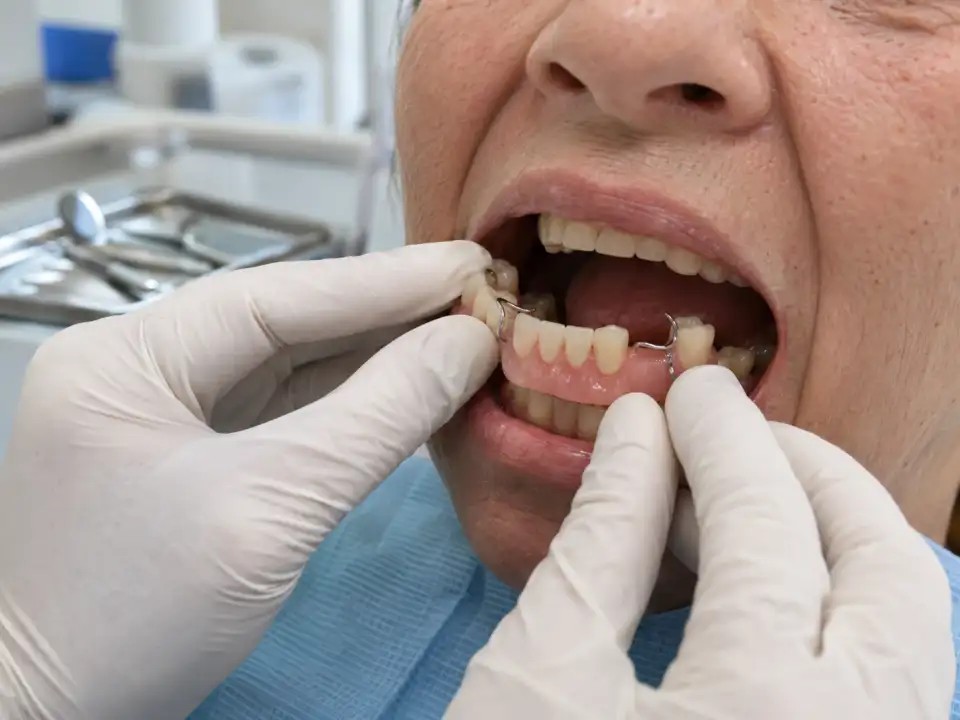
A removable partial denture replaces one or more missing teeth while some natural teeth are still present. It is designed to be removed by the patient for cleaning. A removable partial denture may include:
- Artificial replacement teeth
- Acrylic or another suitable denture base
- Clasps or other retaining components
- Metal framework in selected designs
- Support from remaining natural teeth and gums
Your keyword data contains extensive searches for removable partial denture, one-tooth partial dentures, upper and lower partial dentures, flexible partial dentures, design, price and treatment procedure.
Removable Partial Denture for One Missing Tooth
A partial denture may sometimes replace only one missing tooth. This may be considered for:
- A missing front tooth
- A missing premolar
- A missing molar
- A temporary or longer-term tooth replacement depending on the design
Suitability depends on the position of the gap and condition of the surrounding teeth.
Removable Partial Denture for Front Teeth
A removable partial denture can replace missing front teeth. Important considerations include:
- Tooth shade
- Tooth shape
- Smile line
- Denture retention
- Gum appearance
- Remaining teeth
For visible front teeth, appearance becomes an especially important part of treatment planning.
Removable Partial Denture for Back Teeth
Partial dentures can also replace missing premolars and molars. Back-tooth replacement may help restore chewing in the affected area. The design depends on how many back teeth remain and where support can be obtained.
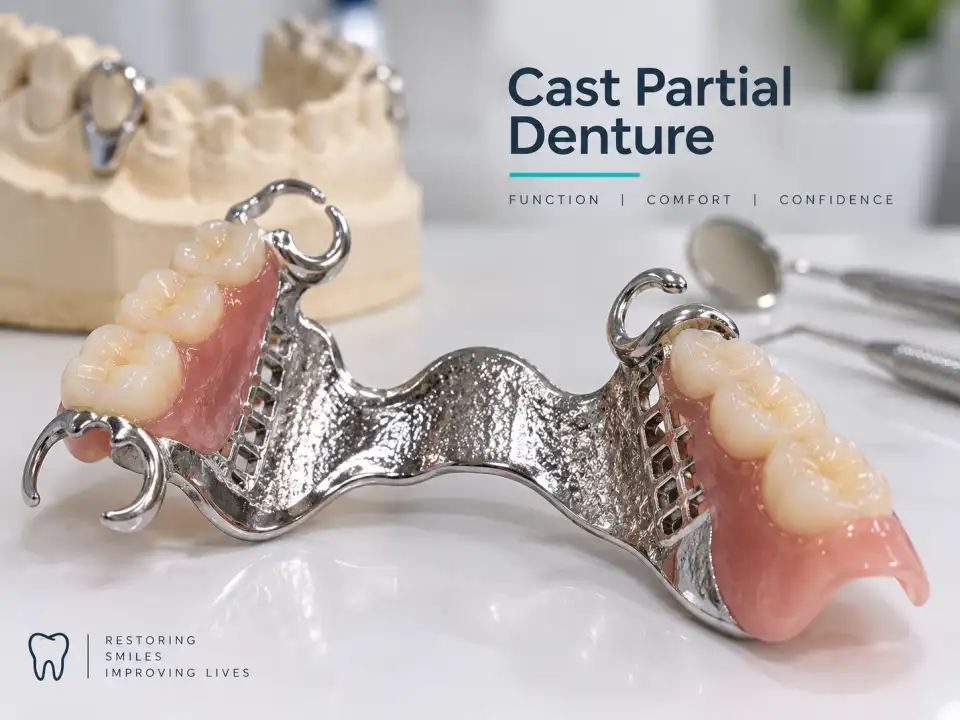
Cast Partial Denture
A cast partial denture is a type of removable partial denture that uses a cast metal framework for support and stability. The framework may include:
- Metal connectors
- Rests
- Clasps
- Denture bases
- Artificial replacement teeth
Your supplied keyword data strongly supports content around cast partial denture, cast metal partial denture, metal framework, clasps, design, indications, cost and comparisons with acrylic or flexible dentures.
Cast Partial Denture vs Acrylic Partial Denture
Both can replace missing teeth, but they differ in construction.
Cast Partial Denture
May provide:
- Metal framework
- Greater rigidity
- Thinner framework in certain areas
- Tooth-supported components
- Long-term removable partial denture option in appropriate cases
Acrylic Partial Denture
Usually uses:
- Acrylic base
- Artificial teeth
- Clasps where required
Acrylic dentures may be considered in different clinical situations, including temporary or transitional treatment. The choice should be based on the individual mouth rather than material alone.
Cast Partial Denture vs Flexible Denture
A flexible denture uses a more flexible base material, while a cast partial denture typically incorporates a rigid metal framework. Factors influencing the choice include:
- Location of missing teeth
- Number of remaining teeth
- Type of support available
- Bite
- Appearance
- Retention
- Gum and bone condition
Neither design is automatically appropriate for every patient.
Is a Cast Partial Denture Removable?
Yes. Despite its metal framework, a cast partial denture is generally a removable dental prosthesis. The patient removes it for cleaning according to the instructions provided.
Complete Denture
A complete denture, also called a full denture, replaces all teeth in an upper or lower dental arch. A patient may require:
- Complete upper denture
- Complete lower denture
- Upper and lower complete dentures
Your supplied keywords show strong interest in complete denture price in Pakistan, complete denture materials, complete denture process, upper and lower dentures, complete denture retention, impressions and care.
Complete Upper Denture
A complete upper denture replaces all missing teeth in the upper jaw. Its support and retention depend on:
- Shape of the upper jaw
- Gum tissues
- Palatal anatomy
- Denture extension
- Saliva
- Fit of the denture
Complete Lower Denture
A complete lower denture replaces all teeth in the lower jaw. Lower dentures may present different retention challenges because of:
- Tongue movement
- Smaller supporting area
- Floor-of-mouth movement
- Ridge shape
- Muscle activity
Careful impressions, bite registration and adjustment are important parts of treatment.
Partial Denture vs Complete Denture
A partial denture is used when some natural teeth remain. A complete denture is used when all teeth in the relevant dental arch are missing.
Partial Denture
Suitable when:
- Some natural teeth remain
- One or several teeth require replacement
Complete Denture
Suitable when:
- All teeth in an arch are missing
The supporting structures and treatment process differ between these options.
Acrylic Dentures
Acrylic is commonly used as a denture-base material. Acrylic dentures may be used for:
- Complete dentures
- Partial dentures
- Temporary replacement
- Transitional dentures
The thickness, design and support depend on the individual case.
Flexible Dentures
Flexible partial dentures use a more flexible denture-base material than conventional rigid acrylic or metal-framework designs. They may be considered for selected missing-tooth situations. However, flexibility alone does not mean the denture is suitable for every patient.
Immediate Dentures
An immediate denture is made so that it can be placed around the time teeth are removed. Because gums and bone change during healing, immediate dentures may require:
- Adjustment
- Relining
- Future replacement
They differ from conventional dentures made after healing has progressed.
Implant-Supported Dentures
Dental implants can sometimes provide additional support or retention for dentures. Examples may include:
- Implant-retained overdentures
- Selected fixed full-arch implant restorations
- Implant-assisted removable dentures
Implant treatment requires separate assessment of bone, medical history and other clinical factors.
Denture for One Tooth
A small removable partial denture can sometimes replace a single missing tooth. Whether this is appropriate depends on:
- Front or back tooth
- Available support
- Bite
- Condition of remaining teeth
- Long-term treatment plan
A dental bridge or implant may also be discussed as alternatives in suitable patients.
Dentures for Multiple Missing Teeth
Removable partial dentures can be particularly useful when several teeth are missing in different areas. They can replace multiple teeth within a single removable prosthesis. The denture design depends on how remaining teeth can support and retain the appliance.
How Are Dentures Made?
The exact process varies according to the type of denture. A typical treatment may include:
1. Dental Examination
The dentist evaluates:
- Remaining teeth
- Missing teeth
- Gums
- Jaw ridges
- Bite
- Existing dentures
- Oral health
2. Impressions or Digital Records
Records of the mouth are taken to help create the denture.
3. Bite Registration
For many dentures, the relationship between the upper and lower jaws must be recorded.
4. Tooth Selection and Setup
Replacement teeth are selected and arranged according to:
- Tooth size
- Colour
- Bite
- Smile appearance
- Available space
5. Try-In
Depending on the denture type, a trial stage may be used to check:
- Appearance
- Tooth position
- Bite
- Speech
6. Final Denture
The completed denture is fitted and checked.
7. Adjustment
New dentures may require follow-up adjustments as the mouth adapts.
How Long Does It Take to Get Dentures?
Treatment time varies depending on:
- Type of denture
- Number of missing teeth
- Need for extractions
- Healing requirements
- Number of appointments
- Laboratory work
- Whether an immediate denture is required
A complete denture generally requires several clinical and laboratory stages.
Are Dentures Comfortable?
A well-planned denture should be designed to function comfortably, but there is usually an adaptation period. New denture wearers may initially notice changes in:
- Speech
- Chewing
- Saliva
- Muscle control
- Feeling of fullness in the mouth
Persistent pain or sore areas should be professionally adjusted.
Why Is My Denture Loose?
A denture can become loose because of:
- Changes in gum and bone shape
- Wear of the denture
- Poor fit
- Reduced ridge support
- Damage
- Long-term changes after tooth loss
A loose denture may require adjustment, relining or replacement.
Denture Reline
A denture reline modifies the fitting surface of an existing denture so it better adapts to the gums. Relining may be considered when the denture itself is still serviceable but the supporting tissues have changed.
Denture Repair
Dentures can sometimes:
- Crack
- Fracture
- Lose a tooth
- Break around clasps
- Become damaged after being dropped
Some damage can be professionally repaired. Avoid relying on household glue or permanent home repair kits because they may interfere with proper dental repair.
How Long Do Dentures Last?
Dentures do not necessarily last for life. Over time:
- Denture teeth can wear
- The base can deteriorate
- Gums and bone can change
- Fit may become loose
- Bite relationships may change
Regular reviews help determine whether a denture needs adjustment, relining or replacement.
How Often Should Dentures Be Replaced?
There is no single replacement interval for every patient. Replacement depends on:
- Denture wear
- Fit
- Changes in gums and jawbone
- Bite
- Damage
- Appearance
- Ability to chew comfortably
A poorly fitting denture should be assessed rather than simply tolerated.
Denture Care
Proper denture care helps maintain cleanliness and reduce plaque and food accumulation. Patients should:
- Remove and clean dentures regularly
- Brush the denture using an appropriate denture brush
- Clean natural teeth and gums separately
- Clean the tongue
- Follow storage instructions
- Avoid damaging the denture with very hot water
- Attend dental reviews
How to Clean Dentures
When cleaning a removable denture:
- Remove it carefully.
- Rinse away loose food debris.
- Brush all denture surfaces gently.
- Use an appropriate denture-cleaning product when recommended.
- Clean the gums and remaining natural teeth.
- Rinse the denture before putting it back into the mouth.
Your keyword dataset contains significant search interest around denture cleaning, cleaning tablets, denture brushes, hygiene instructions and denture-care products.
Should Dentures Be Removed at Night?
Patients are often advised to give the mouth and supporting tissues some time without the denture. However, specific instructions can vary according to:
- Denture type
- Recent extractions
- Immediate denture treatment
- Implant-supported denture design
- Individual dental condition
Follow the instructions provided for your particular denture.
Denture Adhesive
Denture adhesive may sometimes improve retention for suitable dentures. However, excessive dependence on adhesive can sometimes indicate that a denture no longer fits properly. A repeatedly loose denture should be examined rather than managed indefinitely with increasing amounts of adhesive.
Denture Sore Spots
New or poorly fitting dentures can occasionally cause sore areas. Possible causes include:
- Localised pressure
- Denture movement
- Rough areas
- Poor fit
- Changes in gums
Do not permanently modify or grind the denture at home. The pressure area can usually be identified and adjusted professionally.
Denture Stomatitis
Redness or inflammation underneath a denture may sometimes be associated with:
- Poor denture hygiene
- Wearing the denture continuously
- Poor fit
- Microbial or fungal involvement
- Other oral conditions
Persistent redness, discomfort or burning should be assessed.
Can Dentures Cause Bad Breath?
Dentures themselves are not necessarily the cause of bad breath, but plaque, food and microorganisms can collect on dentures that are not cleaned effectively. Cleaning the:
- Denture
- Tongue
- Gums
- Remaining teeth
is important for oral hygiene.
Denture vs Dental Bridge
A dental bridge is generally fixed to supporting teeth or implants. A denture is usually removable.
Dental Bridge
- Fixed
- May require neighbouring tooth preparation
- Replaces selected missing teeth
Removable Denture
- Removable
- Can replace multiple teeth
- May cover a larger area
- Can sometimes be easier to modify if additional teeth are lost
The correct option depends on the missing-tooth pattern and oral condition.
Denture vs Dental Implant
A removable denture rests on gums and/or uses remaining teeth for support. A dental implant is placed into the jawbone and may support:
- Implant crown
- Implant bridge
- Implant-retained denture
Implants and dentures therefore have different treatment requirements.
Denture vs Bridge vs Implant
These are three different ways of replacing missing teeth.
Denture
Usually removable.
Bridge
Usually fixed and supported by neighbouring teeth or implants.
Implant
Replaces a missing tooth root and can support a crown, bridge or denture. The most appropriate option depends on:
- Number of missing teeth
- Remaining teeth
- Bone
- Gum health
- Medical history
- Cost
- Patient preference
Advantages of Removable Dentures
Potential advantages can include:
- Replacing multiple missing teeth
- Removable for cleaning
- Can replace teeth in different areas
- May avoid extensive preparation of every adjacent tooth
- Different material and design options are available
- Can often be repaired or modified in suitable cases
Limitations of Removable Dentures
Possible considerations include:
- Adaptation period
- Need for removal and cleaning
- Movement in some cases
- Changes in fit over time
- Possible sore spots
- Clasps may sometimes be visible
- Future relining or replacement may be required
Denture Price in Pakistan
The denture price in Pakistan varies significantly according to the type of denture and number of missing teeth. Your keyword data includes direct interest in complete denture price in Pakistan, removable partial denture price in Pakistan and cast partial denture price in Pakistan. Factors affecting cost can include:
- Complete or partial denture
- Number of missing teeth
- Acrylic or cast-metal framework
- Flexible material where appropriate
- Upper or lower arch
- Number of arches
- Tooth selection
- Laboratory requirements
- Need for extractions
- Existing denture repair or replacement
- Additional dental treatment
An examination is required before an accurate individual price can be provided.
Dentures in Rawalpindi
Patients looking for dentures in Rawalpindi can visit Brush & Floss Dental Clinic at: Shop G-14, Bhatti Arcade Plaza, Tulsa Road, Rawalpindi
Our Tulsa Road clinic is conveniently accessible for patients coming from Lalazar, Lalazar Colony, New Lalazar, Dheri Hassanabad, Tahli Mohri, Tahli Mohri Chowk, Sher Zaman Colony, Dhok Huma, Khatana, Ashraf Colony, Kamalabad, Kamalabad Chowk, Harley Street, Dhok Saiydan, Quaid-e-Azam Colony, Khayaban Villas, Ahmedabad, Kotha Khurd, Dhok Jumma, Adiala Road, Rawalpindi Cantt, Baqir Colony, Raja Akram Colony, Gulshan-e-Zaheer and Gulshan-e-Iqbal/Lalazar side. Patients searching for dentures near Lalazar, removable partial denture near New Lalazar, partial dentures near Adiala Road, cast partial denture near Dheri Hassanabad, complete denture near Tahli Mohri, dentures near Kamalabad, denture treatment near Harley Street Rawalpindi or dentures near Rawalpindi Cantt can conveniently visit our Tulsa Road location. We operate from our Tulsa Road clinic; these nearby-area references describe convenient access for patients and do not represent separate clinic branches.
Removable Partial Denture in Rawalpindi
Patients who still have some natural teeth and need replacement for one or more missing teeth may be assessed for a removable partial denture in Rawalpindi. Depending on the case, options may include:
- Acrylic partial denture
- Cast metal partial denture
- Flexible partial denture where appropriate
- Single-tooth partial denture
- Upper or lower partial denture
Frequently Asked Questions About Dentures
What are dentures?
Dentures are artificial replacement teeth and supporting bases used to replace some or all missing natural teeth.
What is a removable partial denture?
A removable partial denture replaces one or more missing teeth while other natural teeth remain.
What is a cast partial denture?
A cast partial denture is a removable partial denture that incorporates a cast metal framework for support and retention.
What is a complete denture?
A complete denture replaces all natural teeth in an upper or lower dental arch.
Can I get a denture for one missing tooth?
Yes. A small removable partial denture may be an option for a single missing tooth in suitable cases.
Are dentures removable?
Most conventional complete and partial dentures are removable. Some implant-supported full-arch restorations use different designs.
Are cast partial dentures removable?
Yes. A cast partial denture generally remains a removable prosthesis despite its metal framework.
How long do dentures last?
Their lifespan depends on fit, materials, wear, changes in the gums and bone, cleaning and maintenance.
Are dentures painful?
A new denture can sometimes cause initial tenderness or pressure areas. Persistent pain should be adjusted and assessed.
Can dentures be repaired?
Some fractures, broken denture teeth and other damage can be repaired, depending on the condition of the denture.
How should I clean dentures?
Remove them carefully, brush all surfaces, use an appropriate denture-cleaning method and continue cleaning the gums and remaining teeth.
Should I sleep with dentures?
Instructions can vary, but many patients are advised to allow the supporting tissues some denture-free time. Follow the advice given for your treatment.
Which is better: cast partial or acrylic denture?
Neither is automatically better for every patient. The correct design depends on missing teeth, support, remaining teeth, bite and treatment requirements.
Which is better: dentures, bridge or implants?
Each option has different advantages and limitations. Suitability depends on the missing teeth, remaining teeth, bone, health and treatment goals.
What is the denture price in Rawalpindi?
The cost depends on whether you need a complete, removable partial, cast partial or another denture design, plus the number of teeth and laboratory requirements.
Book a Denture Assessment in Rawalpindi
For assessment of one missing tooth, several missing teeth or complete tooth loss, contact: Brush & Floss Dental Clinic, Phone / Appointment: 0316-8539478, Address: Shop G-14, Bhatti Arcade Plaza, Tulsa Road, Rawalpindi
Denture Questions
What is the difference between a complete denture and a removable partial denture?
A complete denture replaces all teeth in the upper or lower jaw, while a removable partial denture replaces one or more missing teeth when some natural teeth are still present. Partial dentures may be acrylic, flexible or supported by a cast metal framework depending on the case.
Which denture is suitable for missing teeth: removable partial, cast partial or complete denture?
The suitable denture depends on how many teeth are missing, where they are located, the condition of the remaining teeth and gums, and the available support. Removable partial dentures are used when some natural teeth remain, cast partial dentures use a metal framework for added rigidity, and complete dentures replace all teeth in an arch.
How much do dentures cost in Rawalpindi?
The denture price in Rawalpindi depends on whether you need a complete denture, removable partial denture, cast partial denture or another design. Cost can also vary with the number of missing teeth, upper or lower arch, materials used and laboratory requirements. A dental examination is required for an individual quotation.