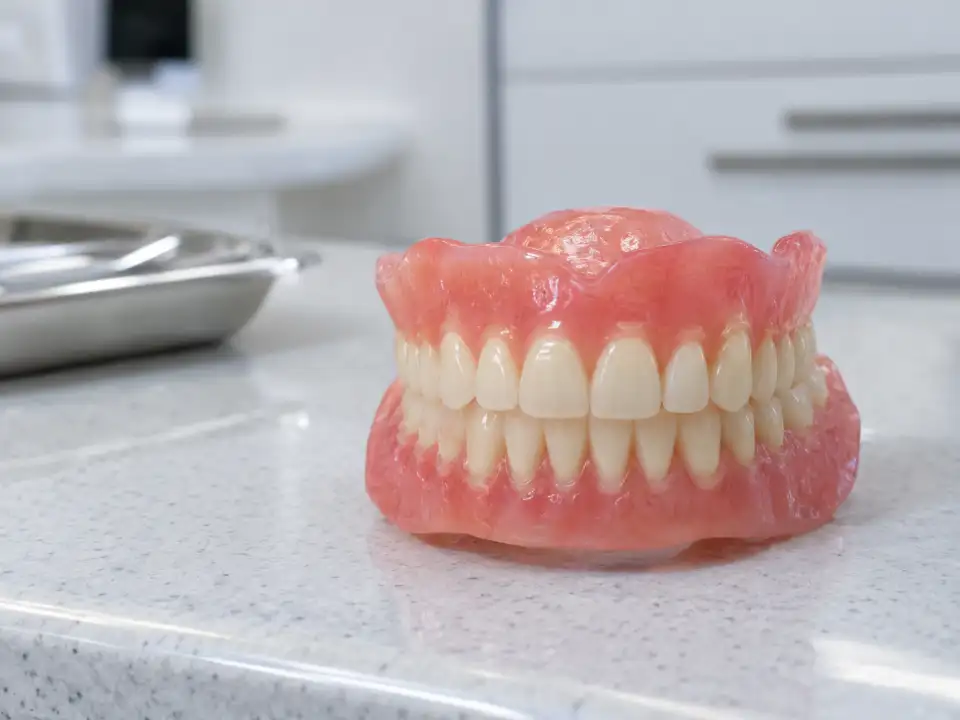
Complete Denture in Rawalpindi
Losing all teeth in the upper jaw, lower jaw, or both can affect chewing, speech, facial support and everyday comfort. A complete denture, also called a full denture, is a removable dental prosthesis designed to replace...
- Professional consultation with our specialist
- Clinic-grade preparation and care
- Clear comfort checks throughout the visit
- Personalised aftercare & follow-up plan
About Complete Denture in Rawalpindi
Losing all teeth in the upper jaw, lower jaw, or both can affect chewing, speech, facial support and everyday comfort. A complete denture, also called a full denture, is a removable dental prosthesis designed to replace all missing teeth in a dental arch and restore basic oral function and appearance. At Brush & Floss Dental Clinic, patients looking for complete dentures in Rawalpindi can visit our clinic at Shop G-14, Bhatti Arcade Plaza, Tulsa Road, Rawalpindi for examination, denture planning, fitting and follow-up adjustments. ADA MouthHealthy – Dentures explains complete and immediate dentures, denture care and what patients can expect.
What Is a Complete Denture?
A complete denture replaces all natural teeth in one dental arch. Depending on the patient's condition, treatment may involve:
- Complete upper denture
- Complete lower denture
- Upper and lower complete dentures
- Conventional complete denture
- Immediate complete denture in selected situations
- Implant-supported denture where appropriate
Complete dentures are normally removable and are designed to fit over the gums and supporting jaw structures.
Who May Need Complete Dentures?
Complete dentures may be considered for patients who:
- Have lost all teeth in the upper jaw
- Have lost all teeth in the lower jaw
- Have lost all teeth in both jaws
- Have remaining teeth that cannot predictably be retained
- Have an old full denture that no longer fits well
- Need replacement of a broken or heavily worn denture
Before treatment, the dentist examines the gums, jaw ridges and any remaining teeth.
Complete Upper Denture
A complete upper denture replaces all missing teeth in the upper jaw. The fit depends on several factors, including:
- Shape of the upper jaw
- Gum condition
- Palatal anatomy
- Amount of remaining bone
- Denture extension
- Saliva
- Relationship with the lower teeth or denture
A properly planned upper denture is designed to provide appropriate support, retention and appearance.
Complete Lower Denture
A complete lower denture replaces all teeth in the lower jaw. Lower dentures can sometimes be more challenging to retain because the supporting area is smaller and the denture must function around movements of the:
- Tongue
- Cheeks
- Lips
- Floor of the mouth
Careful impressions, bite registration and follow-up adjustments are therefore particularly important.
Upper and Lower Complete Dentures
Patients who are completely without teeth in both arches may require upper and lower complete dentures. The two dentures must be planned together so that:
- The bite is balanced appropriately
- Teeth meet in a functional relationship
- Facial proportions are supported
- Tooth position is suitable for speech
- Appearance is acceptable
- Chewing can be restored as much as practical
Conventional Complete Denture
A conventional complete denture is generally made after the mouth has reached an appropriate stage for definitive denture treatment. The process usually involves several appointments for:
- Examination
- Impressions
- Jaw relationship records
- Tooth selection
- Trial fitting
- Final denture insertion
Immediate Complete Denture
An immediate denture may sometimes be prepared before remaining teeth are removed and inserted around the time of extraction. One advantage is that the patient does not necessarily have to remain without teeth during the initial healing period. However, gums and bone change significantly after extractions, so an immediate denture may later require:
- Adjustments
- Relining
- Rebasing
- Replacement
Complete Denture Treatment Process
Your keyword data includes considerable interest in complete denture process, complete denture steps, impressions, bite registration and fabrication.
1. Dental Examination
The dentist evaluates:
- Gums
- Jaw ridges
- Oral tissues
- Remaining teeth if present
- Existing dentures
- Bite relationship
- Medical and dental history
2. Dental Impressions
Impressions are taken to record the shape of the gums and supporting areas. These records help create a denture that adapts to the mouth.
3. Jaw Relationship and Bite Registration
The relationship between the upper and lower jaws is recorded. This helps determine:
- Denture height
- Tooth position
- Bite
- Facial support
4. Tooth Selection
Replacement teeth are selected according to factors such as:
- Tooth size
- Shape
- Shade
- Facial appearance
- Available space
5. Denture Try-In
Before the denture is finished, a trial stage may be used to evaluate:
- Tooth position
- Smile appearance
- Bite
- Speech
- Overall setup
6. Final Denture Fabrication
After the trial stage is approved clinically, the final denture is processed.
7. Denture Insertion
The completed denture is placed and checked for:
- Fit
- Bite
- Pressure areas
- Appearance
- Retention
- Stability
8. Follow-Up Adjustments
New dentures commonly require follow-up visits because the mouth needs time to adapt. Pressure areas can be adjusted if necessary.
Complete Denture Materials
Complete dentures are commonly made using an acrylic denture base with artificial replacement teeth. Material selection may vary according to:
- Denture design
- Strength requirements
- Jaw condition
- Existing treatment
- Laboratory method
Your keyword dataset also includes searches for complete denture materials, acrylic dentures and metal-base complete dentures.
Complete Denture Retention
Retention refers to how well a denture resists movement away from the supporting tissues. Retention can be affected by:
- Shape of the jaw ridge
- Denture extension
- Saliva
- Fit
- Muscle control
- Oral anatomy
Upper and lower dentures can behave differently because their supporting anatomy is different.
Complete Denture Stability
Stability refers to how well a denture resists sideways or rotational movement during function. Factors that may affect stability include:
- Ridge shape
- Tooth position
- Bite
- Denture-base adaptation
- Muscle coordination
Are Complete Dentures Removable?
Yes. Conventional complete dentures are generally removable and should be taken out according to the dentist's instructions for cleaning and oral tissue care. Implant-supported prostheses can have different designs and may be removable or fixed depending on the treatment.
Are Complete Dentures Permanent?
Complete dentures are intended as long-term tooth replacements but should not automatically be considered permanent for life. Over time:
- Gums change
- Jawbone shape changes
- Denture teeth wear
- Denture bases can deteriorate
- Bite relationships can change
This may result in the need for adjustment, relining or replacement.
How Long Do Complete Dentures Last?
There is no exact lifespan that applies to every patient. Longevity depends on:
- Denture material
- Oral changes
- Amount of wear
- Cleaning
- Jawbone changes
- Accidental damage
- Daily use
- Maintenance
Regular dental reviews help determine when a denture requires modification or replacement.
How Long Does It Take to Adjust to Complete Dentures?
New dentures require an adaptation period. During the first days or weeks, patients may notice changes in:
- Speech
- Chewing
- Saliva
- Tongue space
- Lip and cheek movement
- Denture awareness
These sensations often improve as the muscles and mouth adapt.
Eating With Complete Dentures
When beginning to use a new denture:
- Start with manageable foods
- Cut food into smaller pieces
- Chew carefully
- Try to distribute chewing on both sides
- Avoid excessively hard foods initially
- Follow any specific instructions provided after fitting
Chewing efficiency with dentures differs from natural teeth and usually improves with practice.
Speaking With New Dentures
Speech can initially feel different because the tongue must adapt to the new tooth and denture positions. Reading aloud and regular conversation can help patients become accustomed to the new appliance. Persistent speech difficulty should be mentioned at a review appointment.
Are Complete Dentures Painful?
Complete dentures should not continuously cause pain. New dentures may initially create:
- Pressure areas
- Mild gum tenderness
- Minor sore spots
Persistent pain may indicate that adjustment is required. Patients should avoid attempting to grind or reshape the denture themselves.
Why Does My Complete Denture Feel Loose?
A denture may become loose due to:
- Changes in jawbone
- Changes in gums
- Poor adaptation
- Long-term wear
- Damage
- Reduced ridge support
A loose denture may require:
- Adjustment
- Reline
- Rebase
- Replacement
- Discussion of implant-assisted retention where appropriate
Complete Denture Reline
A denture reline modifies the internal surface of an existing denture to improve its adaptation to changed gum tissues. Relining may be appropriate when the denture itself remains usable but no longer fits the gums as closely as before.
Complete Denture Repair
Complete dentures can sometimes develop:
- Cracks
- Fractures
- Broken denture teeth
- Base damage
Some damage can be professionally repaired. Do not use household glue as a permanent repair because this can damage the denture or interfere with proper laboratory repair.
How to Clean Complete Dentures
Good denture hygiene is important. A routine may include:
- Remove the denture carefully.
- Rinse away food particles.
- Brush all denture surfaces gently.
- Use an appropriate denture-cleaning product.
- Clean the gums, tongue and oral tissues.
- Rinse before reinserting the denture.
Your keyword data also contains strong interest in complete denture home care and denture hygiene.
Should Complete Dentures Be Removed at Night?
Many denture wearers are advised to give the oral tissues some time without the dentures. However, recommendations may vary for:
- New dentures
- Immediate dentures
- Certain medical circumstances
- Implant-supported dentures
Follow the instructions provided for your specific treatment.
Complete Dentures and Denture Adhesive
Some patients use denture adhesive to improve retention. Adhesive should not be used to indefinitely compensate for a denture that has become significantly loose. A poorly fitting denture should be professionally evaluated.
Complete Denture Sore Spots
New dentures can occasionally create pressure areas. Signs may include:
- Local soreness
- Red areas
- Ulceration
- Pain while chewing
These areas can usually be identified and adjusted during a review appointment.
Complete Dentures and Denture Stomatitis
Inflammation beneath a denture can sometimes be related to:
- Inadequate cleaning
- Wearing dentures continuously
- Poor fit
- Fungal or microbial involvement
- Other oral conditions
Persistent redness, burning or soreness should be examined.
Complete Denture vs Removable Partial Denture
A complete denture replaces all teeth in an arch. A removable partial denture replaces only some missing teeth while natural teeth remain.
Complete Denture
- Used when all teeth in an arch are absent
- Supported primarily by gums and underlying structures
Partial Denture
- Used when some teeth remain
- Can gain support or retention from natural teeth
Complete Denture vs Cast Partial Denture
A complete denture replaces all teeth in an arch. A cast partial denture replaces selected missing teeth and uses remaining natural teeth plus a cast metal framework for support. They are used in different clinical situations.
Complete Denture vs Dental Bridge
A complete denture is generally removable and replaces all teeth in an arch. A dental bridge is usually fixed and replaces one or selected missing teeth. Patients missing all teeth are generally not conventional fixed-bridge cases unless implants are being used as supports.
Complete Denture vs Dental Implants
A conventional complete denture rests on the gums. Dental implants are placed into the jawbone and may support:
- Individual crowns
- Implant bridges
- Implant-retained overdentures
- Selected fixed full-arch restorations
Implant treatment requires additional assessment and is different from conventional denture treatment.
Complete Denture vs Overdenture
A conventional complete denture relies mainly on the gums and supporting tissues. An overdenture may gain additional support or retention from dental implants or selected retained structures. The appropriate option depends on oral anatomy, bone, health and treatment goals.
Complete Denture Price in Pakistan
The complete denture price in Pakistan varies according to the type of denture and individual treatment requirements. This is a prominent commercial term in your keyword dataset. Cost can depend on:
- Upper denture
- Lower denture
- Upper and lower set
- Denture material
- Number of appointments
- Laboratory requirements
- Tooth selection
- Need for extractions
- Immediate or conventional denture
- Existing denture repair or replacement
- Relining requirements
An examination is required before an individual treatment cost can be confirmed.
Complete Denture Treatment in Tulsa Road, Rawalpindi
Patients looking for complete denture treatment in Rawalpindi can visit Brush & Floss Dental Clinic at: Shop G-14, Bhatti Arcade Plaza, Tulsa Road, Rawalpindi
Our clinic is conveniently accessible for patients visiting from Lalazar, Lalazar Colony, New Lalazar, Dheri Hassanabad, Tahli Mohri, Tahli Mohri Chowk, Sher Zaman Colony, Dhok Huma, Khatana, Ashraf Colony, Kamalabad, Kamalabad Chowk, Harley Street, Dhok Saiydan, Quaid-e-Azam Colony, Khayaban Villas, Ahmedabad, Kotha Khurd, Dhok Jumma, Adiala Road, Rawalpindi Cantt, Baqir Colony, Raja Akram Colony, Gulshan-e-Zaheer and Gulshan-e-Iqbal/Lalazar side. Patients searching for complete denture near Lalazar, full dentures near New Lalazar, complete denture near Adiala Road, full denture near Dheri Hassanabad, complete dentures near Tahli Mohri, dentures near Kamalabad, complete denture treatment near Harley Street Rawalpindi or full dentures near Rawalpindi Cantt can conveniently reach our Tulsa Road clinic.
Frequently Asked Questions About Complete Dentures
What is a complete denture?
A complete denture is a removable dental prosthesis that replaces all teeth in the upper or lower dental arch.
Is a complete denture the same as a full denture?
Yes. “Complete denture” and “full denture” are commonly used for a denture replacing all teeth in an arch.
Are complete dentures removable?
Yes. Conventional complete dentures are removable.
Can I get only an upper complete denture?
Yes, if all upper teeth are missing while suitable teeth remain in the lower jaw.
Can I get only a lower complete denture?
Yes, when all lower teeth are missing and a lower complete denture is clinically appropriate.
Are complete dentures painful?
New dentures can cause temporary tenderness or pressure areas, but persistent pain should be adjusted and evaluated.
How long does it take to get complete dentures?
The treatment usually involves several clinical and laboratory stages. Timing depends on healing requirements, extractions and the denture design.
How long do complete dentures last?
Their useful lifespan varies according to wear, changes in gums and bone, fit, maintenance and denture condition.
Why does my full denture keep moving?
Movement may result from changes in the jaw ridge, fit, bite or muscle control. Assessment can determine whether adjustment or relining is needed.
Can complete dentures be repaired?
Many denture fractures or broken teeth can be repaired, depending on the extent of damage.
Should complete dentures be removed at night?
Many patients are advised to allow some denture-free time, but follow the specific instructions provided for your treatment.
Can complete dentures be fixed permanently?
Conventional complete dentures are removable. Implant-supported options can provide different levels of retention, and some implant restorations may be fixed.
What is the difference between complete dentures and implants?
Complete dentures primarily rest on the gums, while implants are placed in the jawbone and may support crowns, bridges or dentures.
How much do complete dentures cost in Rawalpindi?
The cost varies according to whether you require an upper, lower or full set, the material, laboratory work and any additional dental treatment.
Book a Complete Denture Assessment in Rawalpindi
If you have lost all teeth in the upper jaw, lower jaw or both and want to discuss complete denture treatment, contact: Brush & Floss Dental Clinic, Phone / Appointment: 0316-8539478, Address: Shop G-14, Bhatti Arcade Plaza, Tulsa Road, Rawalpindi
Why Choose Complete Denture in Rawalpindi
Complete Denture in Rawalpindi at Brush & Floss Dental Clinic starts with a clear talk about your goal and current condition. We explain the plan, price, time, and care before you book.
Personalised Planning
Every treatment starts with a short check of what you want to change. The team then picks the right steps, product, and home care for you.
Appointment Experience
During the visit, your specialist explains each main step before starting. We keep you comfortable and check the result before you leave.
Careful Finish
Brush & Floss Dental Clinic uses clean tools and clean clinic care. Book for upkeep, an event, or a first visit. You still get careful care from start to finish.
Complete Denture Appointment Steps
- Talk and prep: We review your goal, past work, and any limits. Then we set up the right tools for Denture.
- Care steps: The Complete Denture process is done with steady care. We adjust the pace, product, and finish as needed.
- Finish and aftercare: We review the result with you. You leave with clear care tips and follow-up advice.
Complete Denture in Tulsa Road, Rawalpindi & Nearby Areas
Complete dentures may be discussed when all teeth in an arch are missing or no longer restorable. Brush & Floss Dental Clinic offers complete denture consultation in Tulsa Road Rawalpindi from Shop G-14, Bhatti Arcade Plaza, Tulsa Road, Rawalpindi, with attention to fit, facial support, chewing expectations, speech adaptation and aftercare. The clinic is convenient for patients from Lalazar, New Lalazar, Dheri Hassanabad, Tahli Mohri, Kamalabad and Harley Street. People searching for complete dentures in Tulsa Road Rawalpindi, full dentures near Lalazar or a denture dentist near Adiala Road can visit the Tulsa Road clinic for assessment rather than expecting a branch in each locality. Brush & Floss Dental Clinic also receives denture patients from Rawalpindi Cantt, Quaid-e-Azam Colony and Gulshan-e-Zaheer.
Complete Denture FAQs
What is a complete denture and who needs one?
A complete denture, also called a full denture, is a removable dental prosthesis that replaces all teeth in the upper jaw, lower jaw, or both. It may be suitable for patients who have lost all natural teeth in an arch or whose remaining teeth cannot predictably be retained.
How long does it take to get complete dentures?
Complete denture treatment usually requires several stages, including examination, impressions, bite registration, tooth selection, trial fitting and final insertion. The total time depends on whether extractions are required, how the gums are healing and whether the denture is conventional or immediate.
How much does a complete denture cost in Rawalpindi?
The complete denture cost in Rawalpindi depends on whether you need an upper denture, lower denture or both, along with the materials used, laboratory work and any additional treatment required. A dental examination is needed before an individual quotation can be provided.